


- Nepal
- 5545 meters
- 1 Day
- Min. 1 Pax
- EBC & Kala Patthar
Overview
Everest Base Camp is located in the Khumbu region of Solukhumbu district. Most trekkers trek on foot for several days to see Mount Everest up close and enjoy the adventure. But you don’t need to trek for 2 weeks through the Khumbu to see Mount Everest. Helicopter tours are a thrilling way to explore the Himalayas for those who don’t like trekking or are short on time. The Everest Base Camp Helicopter tour is a one-day aerial journey that offers a close look at the beautiful Himalayan ranges, valleys, and diverse landscapes and landmarks. Instead of walking a long uphill journey, travellers can enjoy aerial views of the mountains in a few hours.
Depending on the weather, air traffic, and helicopter availability, the whole experience takes around 3-4 hours. Travellers can see Mount Everest from the closest viewpoint, Kalapatthar, and capture and enjoy the moment. The Everest Base Camp helicopter tour will take you to Everest Base Camp at an altitude of 5,364 meters or 17,598 ft, from where you can gaze upon the most mesmerising view of Mount Everest, Mount Lhotse, Mount Makalu, Mount Cho Oyu, Mount Nuptse, Mount Ama Dablam, and other peaks of the Himalayas.
The tour begins early in the morning in Kathmandu with a helicopter flight directly to Namche, landing near Hotel Everest View at an elevation of 3,440 meters (11,286 ft). In Namche Bazaar, travellers have time to explore, enjoy the surroundings, and take in the mountain views before boarding the helicopter again. From the Hotel Everest View, the flight continues toward Kala Patthar, where the helicopter lands, and you can spend a short time enjoying a close view of Mount Everest and other peaks of the Himalayas. The return journey begins directly from Kala Patthar to Kathmandu. On the way back, it may land at Tenzing-Hillary Airport in Lukla for refuelling; it is considered one of the most challenging and thrilling airports because of its mountainous terrain.
Travellers will reach the highest point at Kalapatthar, which lies at an elevation of 5,545 meters (18,192 ft). Kalapatthar offers the best view of Mount Everest. From the helicopter, travellers can enjoy the views of the Khumbu Glacier, the Khumbu Icefall, and many snow-capped mountains. You can also see beautiful forests, river valleys, and Sherpa settlements built on mountain slopes, surrounded by green hills and deep valleys. Witnessing a wide aerial view of the UNESCO-listed World Heritage Site, Sagarmatha National Park, with its breathtaking mountains, glaciers, deep valleys, and beautiful landscape, is truly worth the experience.
Spring and Autumn are the most preferred seasons for Everest Base Camp Helicopter tours. These seasons offer clearer skies and drier weather, providing better visibility. Helicopter tours are best for those with limited time or who prefer not to walk but still want to enjoy panoramic views of Mount Everest and other Himalayan peaks. Although they offer the quickest way to experience the Khumbu region, flights depend heavily on weather conditions and visibility. Flight delays and route changes are possible during bad weather.
Highlights of Everest Base Camp Helicopter Tour
- Experience the Everest region in a single day without trekking for almost 2 weeks through the Khumbu.
- Enjoy thrilling helicopter journeys from Kathmandu while also seeing the changing landscape, deep valleys, and glaciers from the air.
- Land in Namche Bazaar, where trekkers spend their acclimatisation day by exploring the area and enjoying the mountain views.
- Continue the flight toward Kalapatthar, the highest viewpoint at 5,545 meters, to see Mount Everest.
- Witness the four tallest Himalayan peaks above 8,000 meters, like Everest, Lhotse, Makalu, and Cho Oyu, and other Himalayan peaks.
- See Everest Base Camp from the air, with its dramatic high-altitude landscape and the changing terrain of the Khumbu region.
- Enjoy aerial views of Sagarmatha National Park and mesmerising views of mountains, glaciers, icefalls, valleys, and alpine landscapes.
- Watch the landscape transform from lower green hills that grow beautiful rhododendrons and other flora to deep valleys, rocky alpine terrain, and glaciers.
- Watch the Sherpa settlement in a high-altitude area built on mountain slopes surrounded by green hills and forests.
- Experience the famous and thrilling Tenzing-Hillary Airport in Lukla, a possible refuelling stop.
- Enjoy the iconic aerial photography opportunities of snowcapped mountains and glaciers from different angles during the flight.
Everest Base Camp Helicopter Tour Itinerary
This is a 1-day trip. So the itinerary only includes one day's sightseeing activities and stops in the Everest region.
Starting Point: Kathmandu (Tribhuvan International Airport)
The helicopter will land at Hotel Everest View, located at an altitude of 3,880 meters (12,729 feet), one of the highest hotels in the world. Here, you can enjoy panoramic views of the Everest region and take some time to appreciate the stunning mountain scenery.
Fly Over Kala Patthar
After taking in the view at Hotel Everest View, the helicopter will head towards Kala Patthar, a famous viewpoint near Everest Base Camp. It offers one of the best 360-degree views of Mount Everest and surrounding peaks, including Lhotse, Nuptse, and Makalu. While you won’t land, the aerial view is awe-inspiring, offering unparalleled photo opportunities.
Fly Over Everest Base Camp
The helicopter will fly over the iconic Everest Base Camp, where climbers begin their journey toward the summit. While you won’t land here either (due to altitude restrictions and safety reasons), the aerial view of Base Camp and the Khumbu Icefall is still breathtaking.
Return Flight to Kathmandu
After exploring the Everest region from the sky, the helicopter will head back to Kathmandu, concluding your thrilling adventure.
Total flight time: Approx. 3-5 hours (depending on weather and air traffic)
Kathmandu to Hotel Everest View: 60-80 minutes
Hotel Everest View to Kala Patthar and Everest Base Camp fly over: 20-30 minutes
Return flight to Kathmandu: 60-80 minutes
EBC Helicopter Tour Package Inclusions and Exclusions
Package Includes
- Airport pickup and drop-off by private car or van
- All necessary trekking permits, National Park permits and entry fees
- Helicopter fare and airport tax (Sharing Helicopter)
- Oxygen supply for quick evacuation in case of emergency
- Fuel surcharges
Package Excludes
- International tickets or visa fees
- Breakfast and tea in Everest region locations
- Tips and gratuities for helicopter staff or the agency
- Any other expenses which are not mentioned on Price Includes section
Does the Helicopter Land at Everest Base Camp?
No, the Everest Base Camp Helicopter doesn’t land directly at Everest Base Camp; it flies over the base camp and Khumbu glaciers, allowing passengers to see the camp and surrounding landscape through the helicopter. It uses Kala Patthar or another approved high-altitude location for sightseeing, as the Civil Aviation Authority of Nepal (CAAN) forbids landings at the Everest Base camp.
At the high altitude of the EBC, landing is restricted because the camp sits on moving glacier terrain with no suitable landing space. At this altitude, thin air also reduces helicopter performance, making the landing and takeoff highly risky and challenging. So for better options the landing takes place in Kalapatthar (5,545 meters).
Best time for One Day Everest Base Camp Helicopter Tour

Choosing the right season for the Everest Base Camp Helicopter Tour is important because weather conditions affect both safety and the quality of the experience. Helicopters flying into the Everest region depend on conditions such as wind, weather, and visibility, especially around the high mountain valleys and landing area.
Flying during the off-season can be dangerous because unfavourable weather can cause delays or cancellations. Temperature, rainfall, snow, cloud, and wind all affect flights and their schedules. Conditions change throughout the year; for example, autumn mornings can be cloudy and cold, and winter can bring harsh winds. Spring and autumn are the most popular and favoured seasons for the tour because of their weather conditions. The clouds are clear and mountain visibility is good, but the crowds can be heavy, so you must book your flight well in advance.
Spring (March to May)
Spring (March-May) is a preferable and popular time for the Everest Base Camp Helicopter Tour. The weather warms after the cold winter, and the region offers good visibility and stable flying conditions. Rain might be occasional and could increase cloud cover towards late May. Spring brings changes to the landscape view. Snow covers the peaks of the Himalayas, while the lowlands become greener and lusher, giving rhododendrons time to bloom across the hills and forests. The combination of snowy mountains and colourful valleys makes spring beautiful, especially from the air.
The main advantages of spring are good mountain visibility, stable weather, long daylight hours, and the region’s beautiful scenery. Temperatures around Everest Base Camp and Kalapatthar range from -5 °C to 8 °C during the day and drop to -15 °C to 5 °C at night, with March being the coldest month. It is also the peak climbing season, so expedition activity in the Everest region may be more visible. However, spring tours do come with some drawbacks, mainly because it’s a popular travel season. The helicopter tours will be in high demand, and getting a ticket might take longer than usual. So the best option is to book in advance to avoid the crowd.
Monsoon (June to August)
Monsoon (June-August) is one of the off-seasons for helicopter flights in the Everest region. Excessive rainfall makes the trails muddy and slippery, while cloudy weather and fog reduce visibility, disrupting helicopter tours. Heavy rain can also increase the risk of landslides and flash floods, which can delay flights. Despite this, the landscape becomes greener and lusher, with full rivers, forests, and fresh agriculture across Khumbu.
The main advantages of the monsoon are fewer crowds due to lower demand, a peaceful atmosphere, and lower travel prices. Around the camp, daytime temperatures range from 10°C to 16°C (50°F to 61°F), while at night they can drop to 0°C to 6°C (32°F to 43°F). July is typically the wettest and cloudiest month, with rough weather. However, monsoon travel by helicopter requires extensive preparation because of flight delays, cancellations, challenging conditions, and changing weather. Travellers should allow extra days because delays and cancellations are more common than you might expect. Overall, the monsoon is a less favourable season for the tour, mainly because conditions are difficult to predict.
Autumn (September to November)
Autumn (September-November) is one of the best and most popular seasons for helicopter tours to Everest Base Camp. After the monsoon, rainfall decreases and the weather starts stabilising, clearing the skies, and creating a perfect window for helicopter operations. Green hills, forests, and valleys are still fresh in September, and the vegetation slowly changes as the season moves towards November. Clear skies and clean air offer excellent views of the Himalayan peaks surrounding the Everest Region.
This season is popular for its stable weather, excellent visibility, comfortable trekking conditions, and reliable flight forecasts. Temperatures also remain warmer at lower elevations and colder at higher elevations towards the camp. Daytime temperatures range from 5°C to 12°C (41°F to 54°F), while nighttime temperatures can drop to around -5°C to -15°C (23°F to 5°F). Autumn is also the busiest trekking season, and popular routes can get crowded, especially in October. Accommodations and helicopter tours are in high demand, so you must book in advance.
Winter (December to February)
Winter (December-February) is one of the off-seasons for helicopter tours in the Everest region. The main reason is that, as it becomes extremely cold and there is snow and ice, flying conditions become difficult. Cloudy weather, snowfall, and strong winds can reduce visibility and obstruct helicopter tours. At high elevations, trekkers and passengers face significant risks of hypothermia, frostbite, and avalanches. Daytime temperatures range from -5°C to 5°C (23°F to 41°F), and they can drop to around -15°C to -25°C (5°F to -13°F) at night.
The main advantage of winter is the smaller crowds and easy access to helicopters. Lower demand can also reduce total costs and increase the availability of good helicopter services. A winter helicopter tour is possible; however, extra preparation is important. Although clear winter days can still
Food in Everest Base Camp Helicopter Tour
Although the journey is shorter than the trek to the camp, food is still an important part of the tour. The helicopter reaches high altitude very quickly, so eating a proper meal and being hydrated will help you stay comfortable during the trip. Food depends on the package you choose; you might have breakfast before departure, at the landing stop, or after you return. The food variety includes a mix of Nepali, Tibetan, and Western dishes.
What Foods are Available on the Everest Base Camp Heli Tour?
| Food type | Options |
| Nepali Food | Dal bhat, rice, vegetable curry, roti |
| Tibetan-style Food | Momo, Thukpa. Tibetan break, Sherpa-style dish |
| Breakfast | Eggs, toast, porridge, muesli. Pancakes. bread |
| Light meals | Soup, noodles, fried rice, pasta, potatoes |
| Snacks | Biscuits, chocolate, nuts, energy bar |
| Drinks | Tea, coffee. Hot lemon, hot chocolate, water |
| Vegetarian Option | Dal bhat, vegetable curry, noodles, soup. Pasta, potato |
The available food depends on the stops. Kathmandu has the biggest selection, and choices will be limited as you move into the higher Everest region. If your tour includes a meal at a lodge or hotel, the menu depends on them and weather conditions. Some packages include breakfast, and extra snacks will cost extra, so check what is included before you book.
Are there vegetarian options?
In the Everest region, it is better to stick to a vegetarian diet since meat takes longer to digest and requires more energy to burn. Also, meat products are stored and might not be fresh on the trail, raising food-hygiene concerns. So, many vegetarian options are available during the trek, and the place provides meat-free meals. Most vegetarian choices include dal bhat with veggies, curry, noodles, pasta, soup, potatoes and fried rice, pancakes, porridge, and breads.
In case of diet restrictions (eg: allergies, diary/glute free food), you should first consult with the authority of Base Camp Adventure. Your guide will help you inform the accommodation about the requirements and cater to your needs accordingly.
Other Locations to Start the 1-Day Everest Base Camp Helicopter Tour

1. Everest Helicopter Tour from Lukla
This helicopter tour starts after reaching Lukla at 2,860 meters. From here, the helicopter flies through the Khumbu, passing above Namche, Tengboche, Pangboche, Pheriche, and Gorak Shep, then lands at Kalapatthar. The flight from Lukla to Kala Patthar takes 20-25 minutes. After sightseeing, the helicopter follows the same route for return.
2. Everest Helicopter Tour from Phakding
For the Everest Helicopter Tour from Phakding, you reach Lukla and have to trek to Phakding, and instead of continuing the trek, you get to board a helicopter and fly through Khumbu towards the EBC area. The flight continues to Kala Patthar for the main landing,, where you can experience the mountain view; Afterward, you return to Kathmandu according to the flight itinerary.
3. Everest Helicopter Tour from Namche
For this tour, you will trek to Namche via the Phakding route and won’t have to spend more days trekking. From Namche, the helicopter flies to the upper Everest in 15 minutes, passes through the camp area, and lands at Kala Patthar for sightseeing. After the visit, you can fly back to your arranged return destination.
4. Everest Helicopter Tour from Tengboche
After multiple days of walking and trekking to reach Tengboche, you can board the helicopter and quickly fly over the higher Khumbu passing settlements and Himalayan views you get to enjoy from a different perspective. The trip includes landing on Kala Patthar to enjoy the view of different mountains and concludes with the return.
5. Everest Helicopter Tour from Pangboche
The tour from Pangboche starts after trekking far into the Khumbu at 3,900 meters. From the village, the helicopter quickly reaches the higher Everest region, which saves several days of trekking. The chopper flies around the base camp and lands at Kala Patthar, where you can enjoy close-up views of Everest and the surrounding peaks before flying back to your destination.
Everest Helicopter Tour from Kathmandu VS Lukla
Kathmandu and Lukla can be the starting point for an Everest Helicopter Tour, depending on the package, but the overall experience differs.
| Factors | Everest Helicopter Tour from Kathmandu | Everest Helicopter Tour from Lukla |
| Starting Point | Kathmandu | Lukla |
| Best For | Travellers starting directly from Kathmandu | Travellers already in Lukla or trekking in the Everest region |
| Getting to Starting Point | No separate mountain flight is required | You normally need to reach Lukla first |
| Flight Route | Kathmandu flight to Lukla/Everest region with EBC flyover and land at Kalpatthar then high-altitude sightseeing area followed by return | Lukla flight to upper Khumbu then EBC flyover and land at Kalpatthar then high-altitude sightseeing area followed by return |
| Flight Duration | Longer because the journey begins in Kathmandu | Shorter because Lukla is already inside the Khumbu region |
| Mountain Flight Experience | Includes the journey from Kathmandu into the Himalayas | Focuses mainly on the Everest and upper Khumbu region |
| Convenience | More convenient for travellers staying in Kathmandu | More convenient for travellers already in Lukla |
| Cost | Usually higher because of the longer helicopter flight | Usually lower than starting the complete helicopter journey from Kathmandu |
| Weather Dependency | Depends on weather along both the Kathmandu–Lukla and Everest sectors | Mainly depends on conditions around Lukla and the upper Everest region |
| Main Advantage | Complete Everest helicopter experience from Kathmandu | Shorter and more direct access to the high Everest region |
Who is the Everest Base Camp Helicopter Tour Suitable for?
The tour suits travellers who want to experience the Everest Region without harsh trekking.
- Travellers with limited time: The tour is ideal for visitors with only a few days in Nepal; instead of trekking for 2 weeks, you can experience the Everest region in a single day.
- Families: Families who don’t want to, or are unable to, take on the challenge of a long and physically difficult trek may find the helicopter tour more practical. However, parents should still be aware of the effects of the altitude, mainly if they are travelling with children.
- Older travellers: Older travellers who are healthy but don’t want to torture their bodies with the trek, yet still want to experience Everest, prefer this tour. Anyone with medical conditions must consult a doctor before travelling.
- Travellers who do not want a multi-day trek: Not everyone wants to spend days walking and staying in basic accommodation; this tour offers an easier way to see the high region without doing the full trek.
- Photographers: The flight is suitable for photographers because it offers beautiful views of multiple mountains, glaciers and settlements. The changing perspective from the helicopter offers opportunities you won’t see from the trekking trail.
- First-time Nepal Visitors: For first-time visitors to Nepal, the helicopter tour offers a quick, solid introduction to the Himalayas and Everest. It’s a good option for those who want to include Everest in their itinerary without spending their entire trip on one trek.
How Difficult is Everest Base Camp Helicopter Tour?
The Everest Base Camp Helicopter Tour is physically easier than trekking to EBC because most of the journey is by air and requires little walking. The tour still involves high altitude, cold weather, and exposure to thin air, so it shouldn’t be treated as completely effortless.
- High altitude: Altitude is the main challenge on this tour, as the helicopter reaches above 5,000 meters quickly, giving the body little to no time to adjust. At this height, breathing can feel harder, and some people may experience headaches, dizziness, nausea, tiredness, or shortness of breath, which is why landing time is short.
- Low oxygen level: The oxygen available to the body decreases as altitude increases. Even simple activities like walking a short distance and moving around at the landing point will feel tiring. Move slowly and avoid unnecessary physical exertion at altitude.
- Cold temperature: Temperatures at Everest Base Camp are already cold and can be colder during early morning flights and in winter. Wind at high-altitude landing points like Kalapatthar can make it feel even colder, so carry warm layers, gloves, a windproof jacket, and a warm cap, even if you’re only outside the helicopter briefly.
- Unstable weather: Weather changes quickly in the mountains and directly affects helicopter operations. Strong winds, snowfall, rain, clouds, and poor visibility can delay, change, or cancel the flight. Even during peak seasons, the final decision will depend on the weather.


How to Prepare for Everest Base Camp Helicopter Tour?
This tour doesn’t require the same physical preparation needed for the full trek, but you should still prepare properly before flying into the high Everest region. The helicopter gains altitude quickly, taking you from Kathmandu to elevations above 5,000 m in a short time, so low oxygen, altitude, cold temperatures, and weather changes are bigger concerns than your physical endurance. To have a good, comfortable experience, you need to understand what to expect and how to handle it.
1. Prepare for Altitude
High altitude during the tour is the main concern because your body will not get enough time to adjust. Physical fitness alone will not prevent altitude sickness, and even healthy travellers can experience tiredness, headache, dizziness and nausea. Move slowly during stops and avoid unnecessary physical activity; if you experience symptoms, inform your guide immediately.
2. Stay Hydrated and Eat Properly
Drink enough water before and during the trip because dehydration at altitude makes it worse. Have a nutritious meal before departure instead of flying on an empty stomach, and avoid alcohol before flights because it will cause dehydration and raise altitude concerns.
3. Proper Clothing
Even if Kathmandu feels warm, the Everest region won’t be welcoming you warmly; the conditions there can be very cold. Wear clothes in layers so you can adjust as temperatures change. A warm insulated jacket, thermal layers, warm socks, gloves, hat and comfortable shoes are useful during the high-altitude landing.
4. Check Your Health
People with lung conditions, high blood pressure, heart disease or other medical concerns should discuss this with a professional before booking the tour. The rapid elevation change can worsen symptoms, so it is important to understand any personal health limitations before travelling.
5. Be Mentally Prepared
The flight is physically easy, but flying between the mountains and landing at high altitude can feel intense, especially for first-time visitors. Learn about the route, landing stops, altitude, and safety instructions before departure, because knowing what to expect helps you stay calm and fully enjoy the experience.
Why Go on the Everest Base Camp Helicopter Tour?
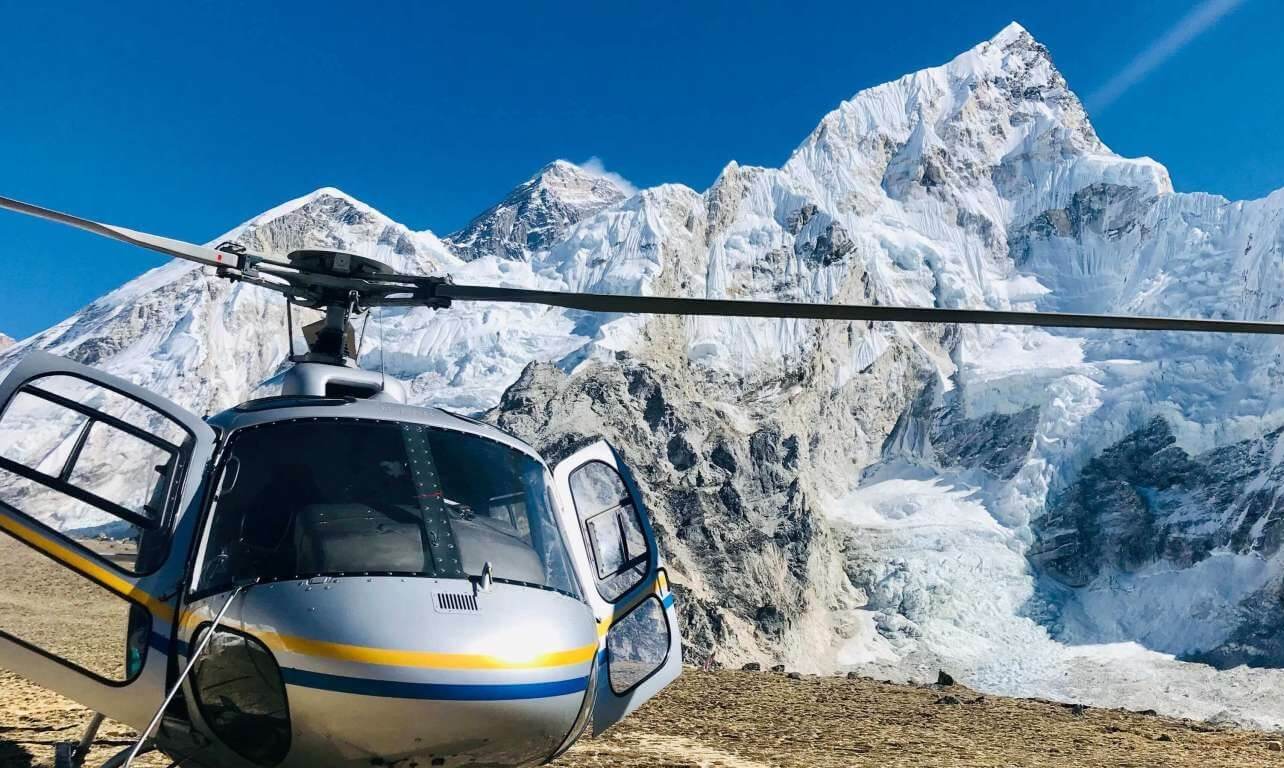
The Everest Base Camp Helicopter Tour is a good option for travellers who want to experience the Everest region without spending many days trekking. It gives you the chance to fly over and see some of the world’s highest mountains and reach high altitudes within a short time. Here are a few reasons to go on the Everest Base Camp Helicopter Tour:
- Save time: A normal Everest Base Camp trek takes many days, while a helicopter tour can cover the main region within a day. For visitors with a short stay in Nepal who still want to see Everest, this tour is ideal.
- Avoid long trekking days: The helicopter tour means you don’t have to walk and trek for 6-8 hours every day. It’s much easier than the full trek, but the high altitude can still be challenging.
- Aerial View of Mountains: The biggest reason to choose the tour is the view. On a clear day, the flight provides a completely different perspective of Mount Everest, Lhotse, Nuptse, Ama Dablam, glaciers, valleys, rivers and Sherpa settlements. This perspective is a once-in-a-lifetime experience.
- Everest View Hotel: Many tours include a landing stop here because it is a good place for a short break, breakfast or drinks, and to wide mountain views before continuing the flight. The hotel offers views of Everest, Ama Dablam, Lhotse, and other peaks.
- Kalapatthar Landing: Kalapatthar is one of the region’s best-known viewpoints, offering a clear view of Mount Everest; people say it’s clearer than from Base Camp itself.
- View of Khumbu Glacier and Khumbu Icefall: The helicopter flight offers an aerial view of the Khumbu Glacier and Khumbu Icefall, the most majestic features of the Everest region. From the flight, you can see huge glaciers and broken sections of ice that would be difficult to admire from the trail.
- Photography: This tour gives photography enthusiasts opportunities for mountain photography. From the air, you can capture Everest, Lhotse, Nuptse, glaciers, valleys and settlements- something you can’t do when on foot.
Permits for Everest Base Camp Helicopter Tour
The tour requires permission to enter the protected Everest region, mainly to land inside the Khumbu. The two main permits are for landing: the Khumbu Pasang Lhamu Rural Municipality permit and the Sagarmatha National Park Entry Permit. Tour companies arrange these permits before the flight, so passengers do not need to visit and obtain them.
Khumbu Pasang Lhamu Rural Municipality Permit
The Everest region falls under the Khumbu Pasang Lhamu Rural Municipality, which collects a tourism fee from visitors entering the area. The fee is currently:
- NRS 3,000 for countries outside SAARC
- NRS 2,000 for SAARC and Chinese visitors.
The municipality requires a passport and a recent photograph for this permit. For the helicopter tour, the company will arrange this as part of the flight preparation. Check whether the permit fee is already included or if you have to pay for it separately.
Sagarmatha National Park Entry Permit
Most of the region is inside the Sagarmatha National Park, a UNESCO World Heritage Site, so visitors entering this park need a national park permit. The entry fee is:
- NRS 3,000 per person
- NRS 1,500 for SAARC nationals
- NRS 100 for Nepali citizens.
For trekkers, the permit is available in Kathmandu or at the park entrance., For helicopter tours, the agency handles it before departure.
Note: A representative from Base Camp Adventure will obtain the permit on your behalf after the booking confirmation or upon your arrival in Kathmandu.
Altitude Sickness During Everest Base Camp Helicopter Tour
Since you spend a short time in Kalapatthar (5,545 m), the chances of sickness are very low. For passengers on the Everest Base Camp Heli Tour, altitude sickness won’t be a concern if you spend a short time and return immediately. However, the helicopter takes you from Kathmandu to elevations above 5,000 meters in a short time. In that sense, if you spend a long time in Kalapatthar, you will get altitude sickness. So, to understand it better, you need to know what it is.
What is Altitude Sickness?
When your body fails to adapt to the low oxygen level that exists at high altitude, you will be susceptible to altitude sickness or Acute Mountain Sickness (AMS). The risk of altitude sickness rises once you are well above 3,000 meters.
Common Symptoms of Altitude Sickness
Some common early symptoms of altitude sickness are:
- Headache
- Dizziness
- Nausea
- Loss of appetite
- Shortness of breath
- Tiredness
- Difficulty sleeping
- Vomiting
- Weakness
Mild symptoms can appear soon after reaching a high landing point. Don’t ignore them, especially if they worsen or other symptoms develop. Since the helicopter tour reaches altitude quickly, passengers should immediately tell their guide or pilot if they begin to feel unwell.
Based on your schedule, you will spend only a short time in Kalapatthar, so altitude sickness and its symptoms are minimal. However, to be on the safe side, it is better to understand its causes and symptoms.

Weight Limit for EBC Helicopter Tour
The weight limit for the Everest Base Camp helicopter tour is around 500 kgs (1,102 lbs). Helicopter ride also depends on the weight of the person. Every helicopter may have a different weight limit. The maximum number in a helicopter is 5 people.
Safety tips for Everest Base Camp Helicopter Tour
- Fasten your seat belt, it may be a scary ride.
- Smoking is not allowed on the flight, be careful.
- Don’t stand or change your seat during the flight.
- Some time Pilot needs to rearrange the helicopter position, so wait for the operator call.
Packing List for Everest Base Camp Helicopter Tour
Everest Base Camp Tour via helicopter is an easy trip. Although it suits everyone and is a luxury trip, going above 5,000m requires preparation. You have to carry the necessary items as you are going to a rural place. The packing is not heavy, but just a few gear items for your convenience.
A general packing list usually includes:
- Windproof jacket
- Windproof Trouser
- Water bottle- 1 L minimum
- Base Layers
- Comfortable shoes
- Fleece Jacket
- Gloves
- Thermal socks
- Inners
- Sunblock
- Sunglasses
- Camera
- Light Snacks
- Personal medications
Note: For a complete Everest Base Camp Trek packing list, check out Packing List for Everest Base Camp.
Trip Notes
One thing you have to be prepared for your flight to get canceled due to the weather condition. The weather might also change the itinerary to some other place for your safety. We can customize your trip according to your needs and desires. You do not have to follow our strict itinerary.
In a scenario where your flight gets canceled, we will try to accommodate this trip into your calendar. If we are unable to do that, we will refund your money back.
You can also cancel your booking a week before your trip and get a full refund.
Helicopter Model

The helicopter you will fly in can carry 5 people and 2 pilots. This helicopter has an increased reserve power, better altitude performance, and a large baggage compartment. It can take off with a weight of 500 lbs; 2400 lbs of useful load.
With a roomy cabin, necessary medical equipment, and comfortable seats, your trip to Everest base camp will be a once in a lifetime experience in luxury.
Conclusion
The Everest Base Camp Helicopter Tour is the fastest and easiest way to experience Everest without long days of trekking. In a short time, you can fly through Khumbu, see Everest and other peaks as well as the Khumbu glaciers and icefall from the air.
This tour is great for travellers with limited time, families, older travellers, photographers, and people who don’t like trekking. The cold temperatures, altitude and weather still need to be taken seriously, and everyone should understand that flight plans can change depending on visibility and mountain conditions. When properly prepared with everything needed and a structured itinerary, the Everest Base Camp Helicopter Tour is a convenient way to see the world’s highest mountain and one of its most famous mountain regions. So, contact Base Camp Adventure for your first Everest Helicopter Tour.
Frequently Asked Questions
General
Of course, you can get a flight on a return from Everest Base Camp despite having trekked. In fact, you can get a pick up in the charter from any feasible places and your convenience. Just make sure to book the flight and we’ll get you as per your instruction.
No. You will only fly to the base camp of the tallest mountain not the top of it.
Yes, we can add a few more minutes as per your request but we cannot hold it for long. The high altitude makes it difficult for us to hold the helicopter for long.
Of course, you can go around and explore the area. But remember that we are not staying in any area for a long time and therefore you have to be quick!
We offer this trip at a very reasonable price. If you come to a large group, we will offer you a discount as per our company rules.
You can contact us via phone or email us. You need to send your full name and preferred date. It is advised to pay for your trip beforehand to confirm your seats.


