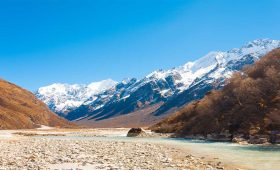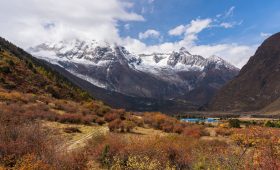

Langtang Valley trekking in March is wonderful, as spring starts this time of the year. The weather is comfortably warm, which offers you a clear sky and good views of Himalayan peaks like Langtang Lirung. Rhododendrons and other wildflowers blossom on the trails, making the valley colorful. This month revitalizes the mountains and each step of the trek will be fresh and new.
Day temperatures are perfect for touring and walking, but the mornings and evenings are still cold at higher altitudes. Bring warm attire so that you are comfortable while enjoying the scenery. March usually has stabilized weather, so you can expect minimal rain or snow. Strong bursts of wind, landslides, or avalanches are nonexistent, so your trek is safer and easier. The paths are not as crowded as during the peak periods, so you can walk through the valley peacefully and take as many pictures as you want without disturbance.
En route, you see spectacular scenery. The slopes are blanketed with wildflowers, and the valley opens up to panoramic views of the peaks around. March also heralds wildlife becoming active, and you get a chance to spot birds and other animals along the trail. You get a chance to see ancient monasteries and study the Tamang people, adding the richness of culture to your trekking experience.

Overall, the Langtang Valley trek in March gives you the perfect mix of nature, weather, and culture. The valley is alive and welcoming as spring begins, making it a perfect time for both new and experienced trekkers to venture into the Himalayan experience. The combination of greenery, settled weather, and few crowds makes the trek absolutely memorable.
Scenic Highlights along the Langtang Valley Trek in March
- The March trek shows refreshed spring hues since the final edges of winter still exist, all under predominantly clear weather.
- Colorful rhododendron trees create vibrant flowers from 2,000 to 3,000 meters along lower to middle slopes.
- Fresh green leaves emerge on oak, pine and maple trees, which creates a refreshing, lively forest scenery.
- Snow melts and supplies the streams and rivers by creating flowing waterfalls and bringing life into the valley.
- You can watch the grand Langtang Lirung mountain peaks at 7,227 m, Ganesh Himal at 7,422 m and Dorje Lakpa at 6,966 m on sunny days.
- The mountains shine golden bright at sunrise and sunset by creating perfect moments for photography.
- On higher tracks, you get sights of leftover winter snow, which adds a beautiful contrast to the astounding views of the blooming flowers below.
- Alpine pastures provide you with open but unobstructed views of glaciers and snowy Himalayan peaks of the mysterious mountain ranges.
- Langtang Village and Kyanjin Gompa are located under imposing mountains, providing wonderful, marvelous sights of the unforgettable landscape.
- You may also do a side trip to Kyanjin Ri, standing at 4,773 m, which provides you with the whole 360° view ofthe Himalayan mountains surrounding.
- Trek Near Kyanjin Gompa along glacial moraines and have a close-up observation of glaciers.
- Domestic animals like young yaks inhabit the rejuvenated alpine grasslands.
- Mountains, valleys, and rivers together offer an amalgamation of dynamic colors and serene landscapes.
Why March is the Best Time to Trek Langtang Valley?

March is the best time to trek to Langtang Valley. The weather is nice, the trails are not crowded, and nature begins to awaken from winter. The month provides the enchanting mixture of snowy sceneries and initial glimpses of spring blooms, which makes the valley unique.
Daytime temperatures in lower elevations range from 5°C to 15°C, comfortable and appropriate for trekking. The open sky and clean air allow for sweeping views of major peaks such as Langtang Lirung, Ganesh Himal, and Dorje Lakpa. March is not likely to have rain or snow, hence trails are dry and well marked, hence easy to travel on compared to the monsoon period.
Nature’s own beauty of the valley is at its best in March. Wildflowers and rhododendrons, white, pink, and red, fill hill slopes. Forests come to life as the winter season finally ends, filled with birds and animals moving about at random will. Travelers may see Himalayan thar and colorful birds on the way. Higher points such as Kyanjin Gompa and Tserko Ri still sparkle with snow, mixing beautifully with the greenery.
Lhosar is the festival of Tamang people observed during this season, so the trek turns out to be all the more special. March is also ideal for a peaceful trekking experience. There are fewer trekkers than in April, and thus the teahouses as well as the trail are vacant, with time to absorb the surroundings. Since there is more daylight, you can trek gradually and see all the scenery without any rush.
You are advised to bring layered clothing, as mornings and evenings will remain cool at higher elevations. It is recommended to book in advance, as teahouses might get busy during March as well. Hiking around Langtang Valley in March provides the complete package of good weather, greenery and a peaceful hike along the Himalayas.
Introduction to Langtang Valley Trek

The Langtang Valley trek in March provides visitors a chance to enjoy the combination of nature and profound cultural heritage. The valley is home to the Tamang and Sherpa tribes and their existence is completely linked with the mountains. Spring begins in the month of March and the villages are lively and welcoming as people begin preparations for the upcoming season and festivals.
March can coincide with Lhosar, the Tibetan New Year, which is celebrated by the majority of Tamang families. Villages during this time are surrounded by colorful prayer flags, and people gather to offer prayers, eat meals and perform their cultural dances. Trekking thus allows tourists to experience these vibrant festivals and taste the warmth of the local communities.
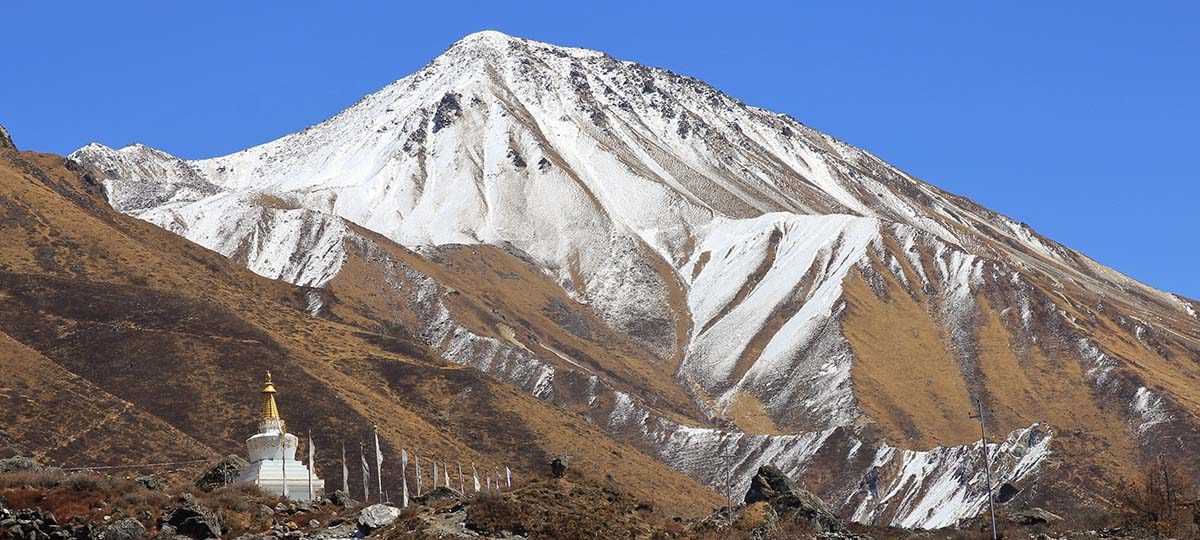
The gompas in the region, especially Kyanjin Gompa, play an important role in everyday life and culture. In March, with blue skies and fine weather, trekkers can easily visit these spiritual centers. They will be able to see prayer wheels, stupas and traditional Buddhist rituals that have been nicely kept up over the years. The peaceful environment of the gompas shows the deep spiritual connection that the people have towards the Himalayas.
Trekkers also enjoy traveling to stone villages like Lama Hotel and Langtang Village. March’s comfortable temperature allows easy walking between villages and untouched trails allow friendly interaction with the populace. Visitation of native architecture, home cooking and experience of mountain livelihoods enriches the trek and makes cultural marks.
Cultural Experiences in Langtang Valley Trek in March
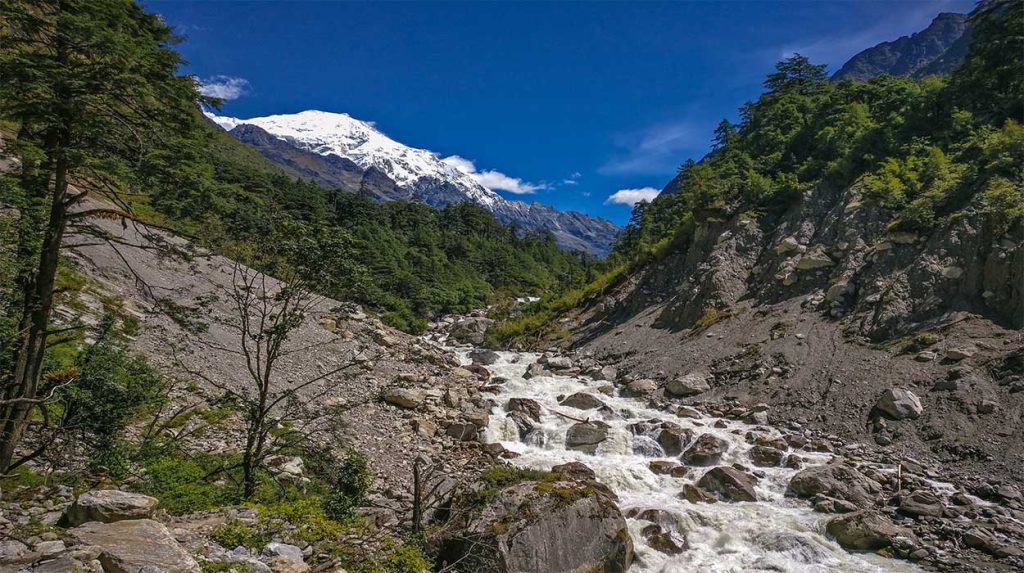
The month of March is an excellent time to experience the cultural side of the Langtang Valley. The valley is inhabited by the Tamang and Sherpa people, whose lives are closely intertwined with the mountains. As spring begins, villages become alive with activity, giving the trekkers a preview of the life of the locals.
This month is normally concurrent with Lhosar, the Tibetan New Year, observed by the Tamang community. The villages are decorated with vibrant prayer flags and the people dance traditional dances, pray and sit down to festive food. Participation in Lhosar during the trek allows travelers a firsthand look at these vibrant customs.
Kyanjin Gompa and some other monasteries are significant cultural sights. In March, nice weather and blue skies make it easy to visit these sacred sites. Trekkers have the opportunity to observe prayer ceremonies, the prayer wheels that rotate, and explore stupas as they learn about the people’s strong Buddhist traditions.
Walking through stone villages like Lama Hotel and Langtang Village in March is quite special. Trails are less populated and interactions with the locals seem more personal. Trekkers get to see ancient structures, savor home food and see glimpses of life in the mountains. This makes for a perfect trek that is culturally rich and worthwhile.
Food and Accommodation for Langtang Valley Trek in March
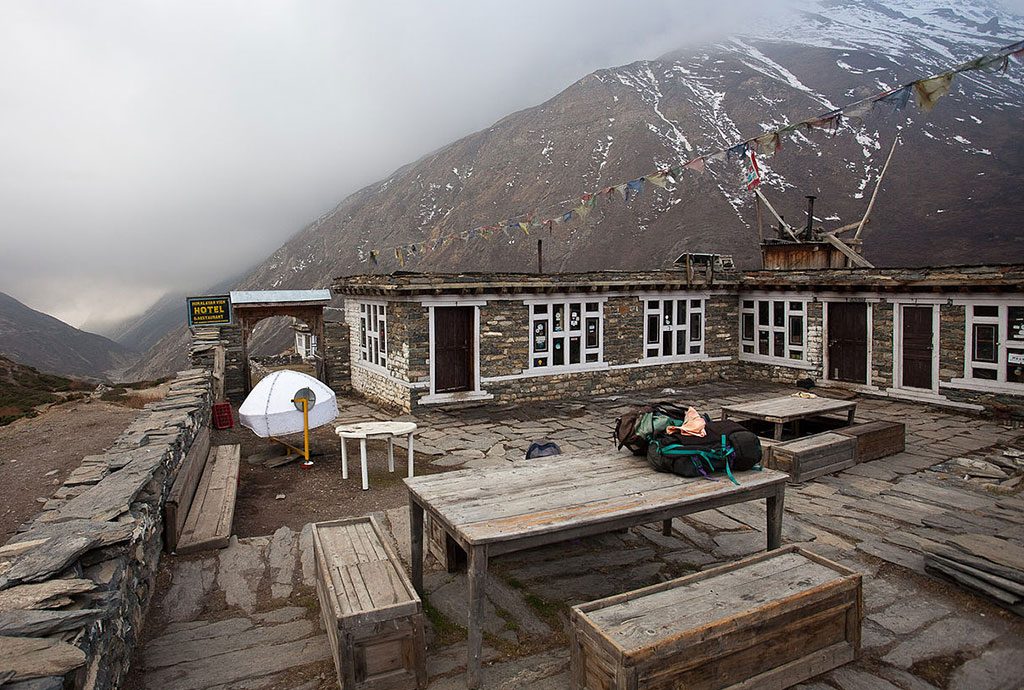
March trekking to Langtang Valley is a unique experience of teahouse accommodations. Basic rooms with twin beds, blankets and communal bathrooms are provided by tiny teahouses in every village along the trail.
In March, the trails are not as crowded because it is the beginning of trekking season, in contrast to April and May and it is not difficult to find rooms. Favourite places like Langtang Village and Kyanjin Gompa are so crowded that it would be a wise decision to book in advance for a pleasant stay.
Meals on the trek are hot, nourishing and perfect for cold March weather. Teahouses provide standard Nepali fare such as dal bhat (lentils and rice), momos, and noodle soups. Biscuits, chocolate, and tea or coffee are also on hand as snacks to perk you up for the day. Some teahouses are powered by solar energy, so morning and evening hot water may be an issue, but the food is always bountiful.
The weather in March completes the overall experience. With fewer trekkers, dinners are relaxed, and there is room to take in the valley views while having dinner. Early mornings and simple evenings, reaching longer days, provide some respite to the trekkers and allow them to mingle freely in the serene teahouses.
Reside in local teahouses that give an insight into the Tamang and Sherpa cultures. The locals narrate tales about their customs and way of living, making the trek experience personalized. Such ease, satisfactory meals and cultural exposure make March a perfect month to visit Langtang Valley.
Safety and Altitude Considerations on the Trail
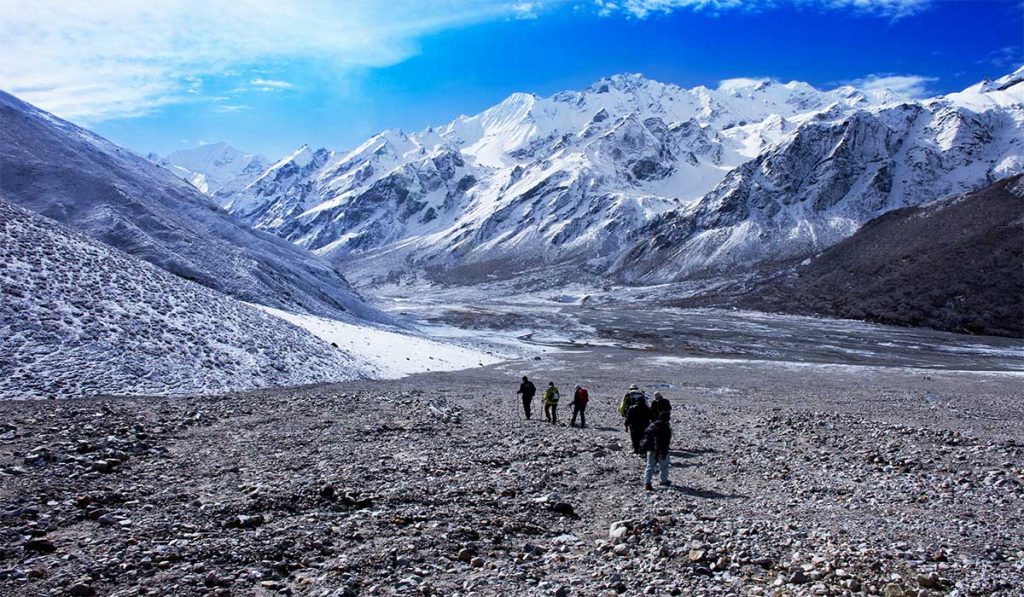
The Langtang Valley trek in March must be undertaken with high consideration of safety and altitude. Although the lower sections are comparatively quite easy, as you move towards the higher sections, you still get to spot leftover snow along the way. It is important to walk slowly on these paths, especially where the ground is slippery, making it unsafe. Trekking poles, as well as comfortable trekking shoes with good grip can reduce the risk of injuries.
Altitude is also to be considered for trekking to Kyanjin Ri which is situated at an altitude of 4,773 meters. It can be quite challenging for those who do not prioritize proper acclimatization. During March, the air is fresh but chilly and the body will feel the impact of the higher altitude. Trekkers are urged to ascend slowly, have rest days whenever required make sure to hydrate themselves with plenty of water to avoid altitude sickness.
Weather conditions can change suddenly in March. Daytime is normally pleasant, but mornings and evenings at higher altitudes will be cold. Layered clothing, warm headwear, gloves and protection from the sun are essentials. Preplanning weather conditions before traveling to higher elevations prepares a person for unexpected snow or wind.
One must also travel with a seasoned guide or trekking agency, particularly for novice trekkers visiting high-altitude treks. The guide can monitor health, suggest acclimatization and respond in emergencies. By combining good preparation, gradual ascent and listening to the terrain and weather, trekkers can appreciate the beautiful view of Langtang Valley securely in March.
Preparing for the Langtang Valley Trek
- Physical and practical preparation are necessary for trekking in the Langtang Valley in March.
- Walking, hiking, or cardio work builds endurance for long trail days.
- Strength training of the back, core, legs reduces fatigue and makes backpacking uphill less strenuous.
- Dressing in layers allows for warm valley days and cool mornings and nights at the upper elevations.
- Waterproof jackets, decent walking shoes, gloves, hats, and sunscreen keep you warm and safe.
- Walking poles, gaiters, and a daypack facilitate easier hiking in snow or uneven terrain.
- Carry a minimal first-aid kit, altitude sickness medicine and water purification techniques to stay healthy.
- Stay hydrated, eat, and manage the pace of your walk to avoid fatigue and altitude sickness.
- Consult a doctor before the trek if you have any medical conditions.
- Book teahouses ahead in Langtang Village and Kyanjin Gompa, busy stops, to afford a rest each night.
- Prepare your mind for altered weather and trail conditions in March.
- Knowing the trail, weather and terrain allows you to appreciate the valley’s scenery and cultural encounters safely.
Trekking Permits and Regulations

For Langtang Valley Trekking in March, you are required to purchase the permits and the following regulations are compulsory. Trekkers must have the Langtang National Park Entrance Permit to help maintain the valley’s wildlife and natural beauty. The officials will check this permit at the park entrance and so it must be safely kept throughout your journey.
March is not a peak month, but regulations are still enforced strictly. Trekkers should make sure to stay on the trails as well as not disturb the wildlife. Littering is not allowed, and garbage must be taken out or disposed of in areas marked for that purpose. Camps are only permitted at marked points, and campfires must be carefully handled to avoid causing forest fires.
During the trek, the park rangers may appear at checkpoints to check permits and ensure safety. Trekkers need to carry an ID as well as a permit. Complying with these rules ensures safety as well as offers an easy trekking experience.
Compliance with rules and permits not only protects you but also ensures that Langtang Valley is conserved for other travelers to enjoy. By adhering to these rules, you contribute to the local community, uphold the wildlife and preserve the natural beauty of the trails. This guarantees for a responsible trek for March that leaves a lasting memory that is quite enjoyable.
What to Pack for the Langtang Valley Trek in March?

Clothing
- Moistureproof base layers
- Insulating fleece jacket
- Down or synthetic insulated jacket
- Waterproof and windproof jacket and pants
- Trekking pants (convertible)
- Thermal socks
- Warm hat and gloves
- Sun hat or cap
- Neck gaiter or buff
- T-shirts
- Lightweight shorts
Footwear
- Sturdy hiking boots
- Camp shoes or sandals
- Multiple hiking socks
Travel Documents & Permits
- Passport
- Langtang National Park permit
- Travel insurance
- Carry Nepali currency cash
Backpacking Gear
- Backpack (40 to 50 liters) with rain cover
- Sleeping bag (4-season)
- Trekking poles
- Headlamp or flashlight
- Sunglasses (UV protection)
- Water bottles or hydration system
- Water purification tablets or filters
- Multi-tool or knife
- Dry bags or plastic bags for waterproofing
Personal Items & Hygiene
- First aid kit (medications and blister care)
- Sunscreen and lip balm with SPF
- Insect repellent
- Biodegradable soap and toiletries
- Toothbrush and toothpaste
- Wet wipes and hand sanitizer
Miscellaneous
- Camera and extra batteries
- Portable charger or power bank
- Snacks (energy bars, nuts, trail mix)
- Notebook and pen
- Duct tape for repairs
Booking Procedure

At Base Camp Adventure, we make sure to take care of booking your trekking adventure so that you can focus on enjoying the journey rather than worrying about the logistics. We start by assisting you in selecting the trek that suits your interests as well as timing. No matter which trek you prefer, we ensure to customize it based on your preference as well as fitness levels.
Once you have decided, we shall guide you through the process of booking to secure your spot. You can then either book the trip immediately through our website or call our 24/7 support team on +977 9851 029616 for any inquiries. We make sure of all the arrangements, be it the domestic flights, trekking permits or providing experienced guides and porters.
To confirm your reservation, you require a non-refundable deposit of 30% of the total trip cost, where the remaining payments are to be paid once you arrive in Kathmandu. Occasionally, we introduce new packages that differ from one another and we also let you know about these options.
We also handle all the logistics, including booking accommodations and arranging trekking permits. A detailed itinerary is then offered along with a packing list before you head on to the trek. So you exactly know what to expect from this journey. We want to make sure you have a safe Himalayan experience by offering lasting memories. Visit our website to start planning for your journey with us.
Key Considerations for a Successful Langtang Valley Trek in March
- Dress in Layers: March days are quite pleasant, but mornings and evenings can feel a bit cold, especially if you’re in higher altitude regions like Kyanjin Gompa. Bring warm clothes like sweaters, thermal tops, hats, gloves and moistureproof inner layers to stay comfortable.
- Altitude Acclimatization: Ascend slowly and give your body time to acclimatize to higher altitudes. Rest days, hydration and listening to your body’s warning signs are important in not developing altitude sickness.
- Footwear and Trekking Gear: Wear rainproof boots with a strong ankle support that is also insulated and has a very durable tread. Make sure to carry trekking poles if the road is uneven or if it is snow-covered. If you wish to drive further, you can also carry gaiters to protect from snow or mud.
- Trail and Road Conditions: March trails are extremely dry and easy to walk. A few roads or trails to Syabrubesi are slippery or bumpy in the initial weeks of the month. Pre-booking transport is recommended for a hassle-free start.
- Description of Safety Precautions: Remain safe with a first-aid kit, medication prescribed and sunscreen. Also check the weather and do not attempt a trek if it is not safe.
- Stay Hydrated and Stay Energized: Eat well-balanced meals on regular time intervals to maintain the level of energy and prevent fatigue at upper elevations.
- Respect the Culture: You’ll be trekking through Tamang villages. Be polite at all times and respect local property, tradition, and customs. You can stay in teahouses and purchase from local sources, supporting the locals and enriching your cultural experience.
- Booking Accommodation: Trails like Langtang Village and Kyanjin Gompa are popular and get booked up in March this year. Book in advance to secure a good and comfortable resting place for your trek.
- Guides and Porters: Engaging the services of experienced guides or porters for security is highly advised, a path and local advice that is best suited to inexperienced trekkers.
- Pacing Yourself: Slow down, stop frequently and admire the scenery. Avoid hurrying for safety, as well as a good trekking experience.
Final Thoughts on the Langtang Valley Trek in March
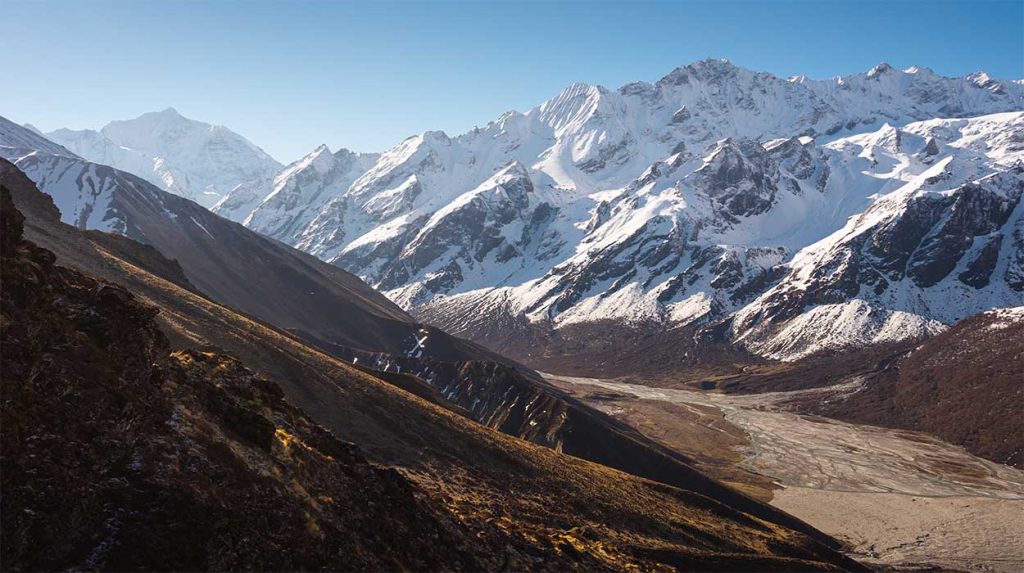
March Langtang Valley trek gives visitors a rare opportunity to witness winter gradually fading away to pave the way for spring. Upper regions such as Kyanjin Gompa and Tserko Ri remain snow-covered by presenting a peaceful winter look. On the other hand, new leaves and colorful rhododendrons start filling the trails with life.
Rivers are brimming with melted snow, wildlife begins to move around and longer daylight hours make it easier to walk. The scenery looks alive, peaceful, and perfect for photography. Moreover, March provides good and consistent weather, which makes trekking enjoyable for beginners as well as seasoned trekkers.
During the day, the weather is pleasant, while clear skies offer unrestricted views of peaks like Langtang Lirung, Ganesh Himal, and Dorje Lakpa. The trails are relatively less wet and safer, and the trekking experience is smoother compared to the monsoon season.
Apart from that, March is less crowded than months such as April and October. Trails and teahouses are serene, facilitating meaningful interactions with Tamang and Sherpa locals. The trek can even coincide with festivals such as Lhosar, providing tourists with a welcoming cultural experience. You can enjoy meals cooked by locals, enter monasteries and also learn about mountain culture in a serene atmosphere.
Trekkers must also acclimatize themselves to cold nights and extreme mornings at high altitudes. Some snow patches on trails can render them slippery, and thus, trekking poles and sturdy boots become essentials. Roads to the Syabrubesi trailhead are also rough in the early part of the month.
Overall, March is ideal for all types of trekkers. With clear blue skies, nice weather, fewer crowds, and colorful landscapes, it promises a safe and memorable adventure. Plan wisely, pack sensibly, and soak up the beauty and heritage of the valley as you head on to this journey of the Langtang Valley trek in March.