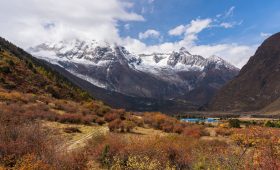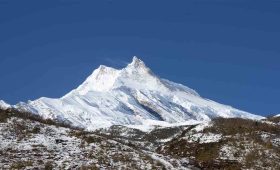


When you trek to Manaslu, you have to make a deal with the weather. While the Everest Camp trek is a straight line, the Manaslu Circuit is a loop. If clouds unexpectedly hinder your journey, you can often simply turn around and head back. To get out of Nubri’s upper valley, Larkya Pass (5,106 meters) is mostly the only way out.
Due to this, it is crucial to be aware of the weather conditions for the Manaslu Circuit Trek for both safety and comfort. Similarly, in Samagaun, a snowstorm can mean more than just a cold day. It might also mean the passes being closed, mules stopping to move, and waiting for a heli rescue. Or else, the situation uses up all your extra days.
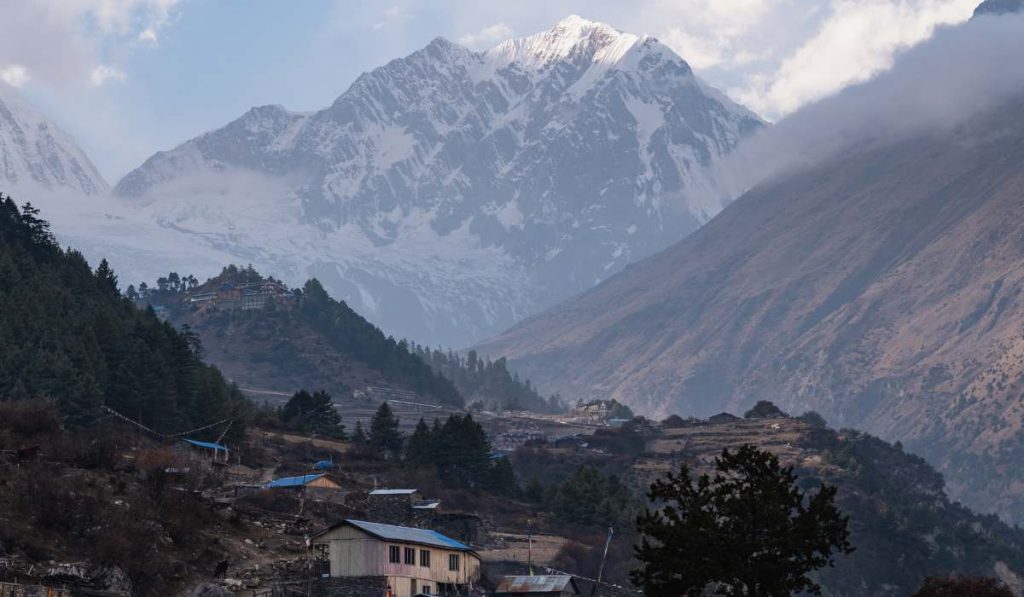
Manaslu Trek is not just about feeling the bitter cold that comes through the plywood walls of a teahouse in November, the mud in the lowlands, and the wind on the pass. You should be aware of every minuscule detail regarding how Manaslu behaves from the hot forests of Soti Khola to the cold wasteland of the pass. Let’s dive in if you want to decide the best time to book your flight.
UNDERSTANDING THE TERRAIN
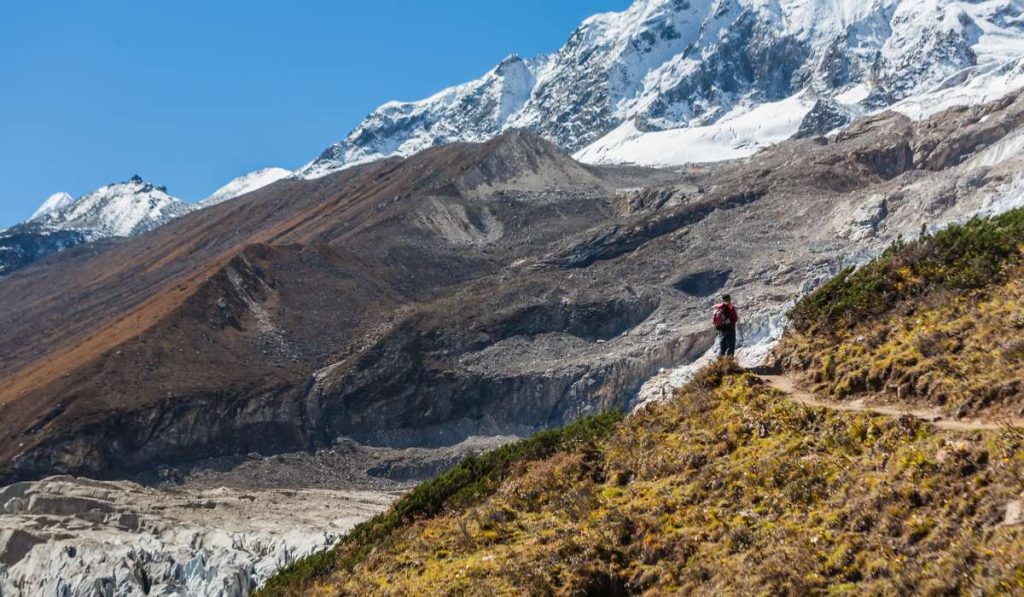
The Manaslu weather is infamously unpredictable. That’s why, before we talk about months, you need to understand the land. The weather is mercurial on the Manaslu Circuit hike because it goes through three different climate zones. You will have to face the transition from the tropics to the Arctic in a week.
Firstly, there is the subtropical zone. This is where the trip from Soti Khola to Jagat starts. The height here is not very high. It ranges from 700 to 1,400 meters. You can expect hot, sticky, and humid weather around here. Even if it’s in the middle of winter, you might be hiking in a t-shirt and still sweating because of how heavy your backpack is.
Consequently, if you hike too late in the spring, you won’t be able to bear the heat. At this time, you will also hear the loud sounds that the river makes and the lush plants you will be surrounded by. After that, you will arrive at the Temperate Zone, which is about halfway between Deng and Lho. The height of this sweet spot goes up to 3,000 meters.
The pine trees give you shade, the air gets thinner, and the humidity plummets. For hiking, the Manaslu trip, hence, generally has a perfect temperature. It is warm enough that you do not need a down jacket all day. But it is also cool enough that you will be able to keep going without getting too hot.
Ultimately, here the Alpine or Nival Zone comes. This shows everything above Samagaun (3,500m). The trees go away. The wind cannot be stopped. This is the highest desert of the Himalayas. The temperature here can drop to almost below freezing point every night of the year.
Along with quick changes in the weather, you will notice that the sun is so strong. Due to that, it will burn you even if you are frozen with cold. You will even need equipment for temperatures between 30°C and -20°C. Definitely, it’s hard to pack, but you try and understand why.
SPRING

Firstly, let’s dive into the spring season. During this time, the lodges open up again, the teahouse owners return from Kathmandu, and the frozen waterfalls start to melt after the long, quiet, and cold winter. This is the time when life blooms in the region.
Many people vote spring to be the second-best time of the year for the Manaslu trip. However, it is perfect for those climbers who are plant lovers.
MARCH
In March, it is not fully winter, but spring has not taken its place yet. If you’re someone travelling in March, you are hopefully wishing for the winter snow to melt quickly enough so that you can easily cross the pass.
Regarding the temperature, March still has high temperatures. In the lower valleys, the weather is nice, with daytime highs of 18°C to 22°C. On the other hand, the cold of winter stays with you as you go up past Lho. At night, the temperature in Samagaun can drop to -10°C or lower. Because the lodges have not had time to dry out from the winter snows, they will be cold and often wet.
This month is also the time when the pass is the most dangerous place. The Larkya La can hold deep snow until late March. You might need to wear gaiters and microspikes just to get from one lodge to another. Or, you might have to break trail through waist-deep snow.
But the best part is that you can be alone. You will have most of the trail just to yourself. The sky, too, is usually clear in the mornings. In the afternoon, however, there are a lot of clouds.
APRIL
It is the best month of spring, which is full of color. In the woods between Jagat and Deng, rhododendrons bloom youthfully. These gigantic trees bedazzle the hillsides in pink, white, and scarlet. It is not possible to enjoy this level of visual comfort in the fall.
The weather in April is not too hot or too cold. In places like Samdo that are in the mountains, the temperature usually varies between 10°C and 15°C during the day. This makes a great time for hiking. You won’t have to worry about being too hot or too cold.
Make sure to have a good quality sleeping bag so you won’t have any difficulty while sleeping. Be aware that the temperature does get below freezing at night. The only drawback to this time of the year is the smog. In the afternoon, the haze caused due to evaporation may conceal the distant peaks as the heat rises in the lowlands. Ensure getting up early to see the best views.
MAY
By May, the temperature on the lowland Manalsu trek is getting unbearable. Walking from Soti Khola to Maccha Khola can feel like being in a sauna. We are talking about temperatures between 30°C and 34°C with a lot of humidity. In a few minutes, you will be sweating through your clothes. While it is walkable, almost no one opts for this.
Due to the extension of the road, most jeeps now drive all the way to Machha Khola. This is, however, the best time of the year to go to Samagaun or cross the Larkya La. Unlike Everest, Manaslu’s crowd is not as busy in May as it is during September and October. Only expect moderate numbers of visitors during this time, specifically in early May.
Also, the base camp’s side trips get very exciting due to the growing excitement at the camp. However, it comes at the expense of visibility. It is known that clouds love to show up in May. Yes, mornings are clear, but by 10:00 AM, the mountains are completely covered in snow.
If you want to hike in order to take pretty pictures, the Manaslu Circuit Trek in May might not be the strongest suit. It is ideal for those who want to escape cold nights and are enthusiastic enough for a physical challenge.
SUMMER = MONSOON

The monsoon months in Nepal begin from June and end in August. In Nepal, the monsoon brings torrential rains. The Prithvi Highway and the part that goes off-road to Soti Khola, which leads to the trailhead, becomes a muddy mess.
Even roads get blocked often due to landslides for days at a time. It could take you half of your vacation just to get to the starting line. And once you are on the path, leeches welcome you in a hot and humid air. Especially in the lower woodlands, they travel extensively. They tend to climb up your boots and fall out of trees. It is not only a fight in the real world, but also in the mind.
Also, the views are no longer there. For weeks at a time, Manaslu hides behind thick clouds that come with the monsoon. If you walk the whole round, you might not be able to see the mountain you came to see.
The Manaslu hike is never too cold, even at high altitudes, but the humidity can be dangerous. Wet gear never dries, and being wet at 4,000 meters is a high risk for hypothermia. Unless you are a botanist studying rainforests, it is highly recommended that you stay away from this season.
FALL

If you’re wondering whether the circuit opens in the fall or not, it does. However, only from September to November. That is it. It is the time of gold. This is exactly when mountains look like they were carved out of diamonds and the skies turn that impossible shade of blue. During this time, those who want to have a traditional Himalayan experience are highly recommended to embark on their trek.
SEPTEMEBER
September is a hard month. The end of the monsoon usually lasts until the first half of the month. There may still be leeches in the lower forests, the air is humid, and the paths are wet.
But the end of September is a magical time. The rain stops all of a sudden, which clears the air of dust and other pollutants. Waterfalls are very strong as well. The landscape is very lush and green because it has been raining for months. This is very different from the dull, dry colors of spring.
During the Manaslu trip, the weather is nice. It is not that cool yet. You will have the opportunity to enjoy the plants without the disturbance of the winter cold. Be reminded that if the monsoon lasts a week longer than usual, you have to prepare yourself for traffic jams or flight delays.
OCTOBER
This is the best month for trekking. For the Manaslu Circuit trip, this month has the best weather than any other time of the year. You can also put your utmost trust in the sky. Stability won’t disappoint you in October. It is guaranteed that you will get to see dawn almost every morning.
For miles and miles, clean, clear, and dry air accompanies you. The reflection of the Manaslu sits perfectly in Birendra Lake this time around. Even Soti Khola is warm, however not too hot. You will feel cold in Samagaun, but not too cold. And, Larkya La’s winds are conveniently predicted. October is just the right time.
This steadiness in the weather is indeed what attracts people. Thus, this is also the busiest month. Teahouses fill rapidly, and you will be in constant surroundings of other groups. There is even a possibility of you needing to sleep in a tent or a dining hall if prior reservations have not been made by your guide.
NOVEMBER
It is the coldest month of the year in the circuit. But many experienced hikers would rather go in November than in October. Why? It is because the sky is still very clear, but you get to enjoy the benefit all to yourself. November barely has visitors.
Do not forget that the hike’s temperature actually plummets in November. The grounds and the streams start freezing. Make sure not to let negligence get in between when you get a sleeping bag. You need a sleeping bag that can handle -20°C and a big down jacket. Note that the mornings in Samdo can be extremely cold, even as low as -10°C if your room is drafty.
But the prize is the open environment. There is no moisture in the air. The white snow looks great against the dark navy blue of the sky. It is the best time of the year for photography sessions. You will get to see themountains get closer and sharper. If handling the cold and having the right gear is not a problem for you, November is undoubtedly a better time to go to the circuit.
WINTER

The winter months last from December to February. You will only be let into the circuit if you’re a dedicated, experienced, and skillful trekker. This time, the Manaslu Circuit tests your survival skills intensely.
You will notice that the lower trail is dry, cold, and sunny. And, once you arrive at the alpine zone, it turns into an Arctic zone. The temperature on the Manaslu trek at Larkya La could drop to -25°C or -30°C with the wind chill.
The Larkya La Pass is the most dangerous part of the trek. Usually, there is an ample amount of snow in January and February. The light snowfalls of Spring are no big deal, but winter storms can drop meters of snow, thoroughly concealing the trail. If this happens, the pass will close. You might have to turn around and walk five days back after hiking all the way to Samdo.
Most of the teahouses in the mountain villages like Samdo and Dharamsala close for the winter because their owners move to Kathmandu. You need to know ahead of time if there is a place to sleep or not. Despite being a spiritual experience that is quiet, empty, and everwheming, it comes at the expense of significant risk.
THE LARKYA PASS

Larkya has a weather system of its own. You must understand the pass’ dynamics meticulously. The Larkya La (5,106m) is one of the best parts of the trek. Its weather is completely different from the weather for the rest of the trip.
In short, the pass is like a wind tunnel. This opening lets cold air from the Tibetan plateau flow through. It creates strong winds that get stronger every day in a way that is easy to predict. Moreover, from 4:00 AM to 8:00 AM, the pass is usually quiet.
This gives you enough reason to start your push to the top in the dark. Ostensibly, at 10:00 AM, the wind starts to rule. The clouds usually dictate the sky by noon. It raises the impossibility of seeing anything, and the wind can reach hurricane winds of 60 to 80 km/h.
Regardless of the month, the temperature on the pass during your Manaslu journey is mostly below freezing. In October, it can get as low as -5°C. January has -25°C, but know that the wind chill is what can actually be lethal. The hard wind can freeze your exposed skin in just a matter of a few minutes. That is why you need to wear face protection, good gloves, and windproof hard shells for this crossing.
TEMPERATURE CHANGES WITH ALTITUDE

Because the elevation changes, it is not possible to give a single temperature for the hike. The temperature on the Manaslu hike usually drops by about 6°C for every 1,000 meters you go up. You start at Soti Khola (700m) and the heat is already on.
By the time you reach Philim (1,570m), the temperature has dropped by almost 5°C. When you reach Lho (3,180m), the temperature has already dropped by another 10°C. When you get to Larkya La (5,106m), the temperature has dropped by more than 25°C to 30°C.
Due to this gradient, it is ideal to dress in layers. You will require more than just one big coat, a base for sweating, a fleece for hiking, and a down jacket that is good for a teahouse. Further, the sun tends to constantly hide behind the clouds, and you climb a steep hill a lot of times. So, be ready to take your layers on and off several times throughout the day.
So, what would be the right time to embark? It ultimately comes down to your perspective. Choose October if you care about safety and views. The weather is at its most stable for the Manaslu Circuit trip. This might be your best chance of getting across the pass with no extreme hurdles, and the views are flawless. All you have to do is let the flock of people not affect your tolerance of being in the crowd.
Moving on, opt for April if you would like to see the flowers and have no issue climbing. The excitement that hovers around you adds to the sense of adventure, and the rhododendrons only show up this time around. Its mild weather makes the night even more fun and social.
Late November is, however, perfect for those who own good equipment and prefer to be alone. The mountain is all yours. Perhaps the quiet compensates for the freezing temperature outside. Consequently, if you’re choosing late September because of its nice weather and plants, brace yourself for dealing with the leeches and muddy trails now and then, too.
It cannot be denied that Manaslu is a wild place. It has not been as affected by commercialization as Annapurna or Everest. The weather is a part of the wilderness. People revere it for that exact reason. Just know that it is not ideal to pack your backpack, imagining the best-case scenario. Be prepared for all that it can be.
Get ready for the storm, the scarcity of blankets in the teahouse on a cold night, and annoyingly changing layers. Ensure you listen faithfully to the local guides. If they say the pass is closed, it really is. Even if they tell you to leave at three in the morning, you must do exactly that.
You are just a visitor. So remember that the mountains will always be there, but the only way to get around them is to know, understand, and respect these patterns. If you are disciplined enough regarding the Manaslu trip weather, the mountain will give you an experience you will never forget.