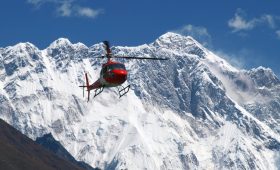

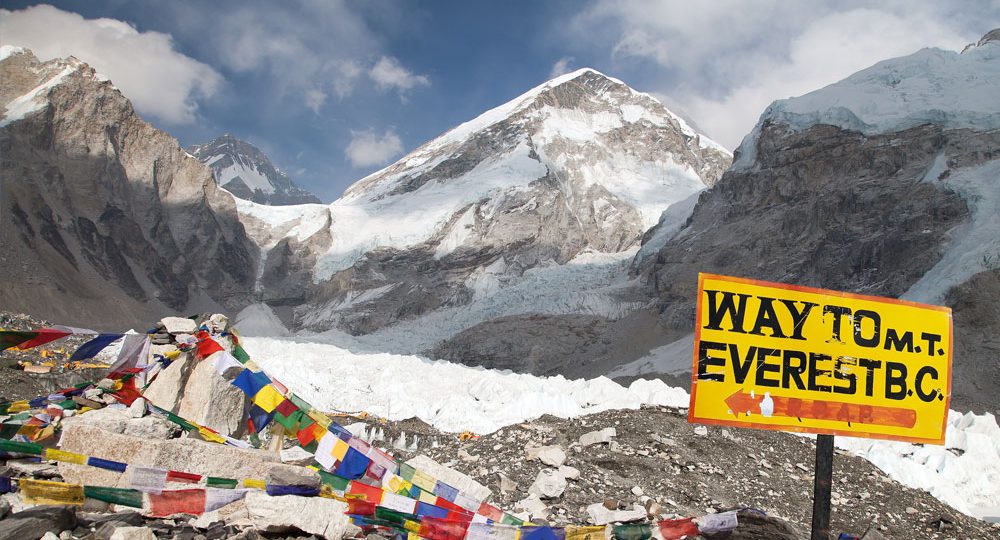
Everest Base Camp Trekking is one of the most renowned and delightful trekking amongst trekking sites in Nepal. Countless people from all around the world fantasize about trekking to Everest Base Camp to experience the cold breeze and whipping wind of the high Himalayas along with relishing the breathtaking outlook of Mt. Everest. While the Everest Base Camp has a lot to present to both beginner and adventurous trekkers, the majestic grandeur of Mt. Everest heaves tourism for magical sightseeing, stirring trekking experience, and riveting mountain climbing.
This trek summons people for the awe-inspiring sights of gigantic Mt. Everest along with the stunning snowy landscapes of its sibling mountains like Lhotse, Nuptse, Makalu, Lhotse Shar, Cho Oyu, Pumori, Khumbutse, Lobuche, and many more.
Mt. Everest is the tallest mountain in the world, with 8,848.86 m(29,031 ft). The holy mountain infuses magical beauty while its towering peaks aim towards heaven. When it comes to trekking to the high Himalayan region, undoubtedly, the EBC trek should be the foremost priority. Delving into the beauty of snowcapped mountains, Buddhist practices, Sherpa settlements, and distinguished high mountain flora and fauna provides you insights into the depth of nature’s wonders and diverse communities.
Besides the stunning glimpses, this trek has proved to be thrilling and adventurous. Trekkers yearn for the beauty of Everest and compete, climbing higher than Everest’s height. Along the way of trekking, there are numerous sightseeing and enjoyable activities to do. Glimpses of Himalayan wild species like Himalayan Tahr, Red Panda, Musk Deer, Snow Leopard, and many more uplift the trekking experience. The beautiful sherpa villages, Buddhist practices, and visiting numerous monasteries give insights into the spiritual way of life. On the way to Base Camp, catching glimpses of adventurers climbing mountains adds beauty to the trek and restores an action-packed journey.
Moreover, the UNESCO World Heritage site, Sagarmatha National Park, encompasses a wide range of glaciers, lakes, valleys, and striking mountainous beauty along with diverse wild species. This trek also takes you through cultural diversity, religious importance, festive atmosphere, and local customs, which unifies with magical sightseeing and a thrilling trekking journey, ultimately providing you with a wonderful experience.
While trekking to the Everest Base Camp is fun, this experience is enhanced with thrilling activities and a spirited atmosphere during winter. Everest Base Camp Trekking is ideal during the Spring and Autumn seasons. This season offers you spectacular sights along with smoothing your trekking journey. While spring and autumn are suitable with moderate temperatures and stable climatic conditions, Everest Base Camp Trekking in Winter is the perfect time for enthusiastic trekkers who seek thrills and challenges. Trekking during this time challenges your determination and energetic warmth to reach the lap of Mt. Everest, conquering any forthcoming hurdles. Furthermore, during winter, the Everest region is completely covered in snow, which provides you with stunning views of snowy landscapes. Also, on a clear sky, the sunlight reflecting through the snowy surface magnifies the beauty of the Himalayas. Winter is extremely cold in the high Himalayas, which is why necessary packing must be done to be prepared for any challenges and ensure a trouble-free journey.
Highlights of the Everest Base Camp Trekking
 Gorak Shep, 5205m elevation, Everest Base Camp Trekking Route, Nepal
- Stunning view of Everest up close
- Astonishing sights of mountainous landscapes (Ama Dablam, Thamserku, Taboche Peak, Kangtega, Lhotse, Cho Oyu, Nuptse, Pumori and many more)
- Trek to Kala Patthar, the highest point of the trek at an altitude of 5644m
- Sagarmatha National Park
- Himalayan Lifestyle and Distinct Flora and Fauna
- Glimpses of Red Panda, Himalayan Tahr, Snow Leopard, Rhododendron, Danphe and many more
- Cultural variation and Festive Atmosphere
- Phenomenal Sunrise and Sunset on a clear day
- Snowy trails, Glaciers, rivers, lakes and adventurous journey
- Warm hospitality and delicious cuisines
- Tibetan Monasteries and Buddhist practices
Why Everest Base Camp Trekking?

Scenic Beauty
Everest Base Camp Trekking offers a delightful experience with its magical sights. From the beginning of the journey, EBC Trekking takes you through multiple trails and villages where stunning landscapes and snow-capped mountains are visible. The sights of the magical high rugged Himalayas, along with encountering diverse village settlements, neighboring glaciers and lakes, enhance the trek to the fullest. The spectacular view of Mt. Everest and its surrounding peaks like Lhotse, Nuptse, Makalu, Cho Oyu, Ama Dablam, and Pumori seizes your attention in exchange for a wonderful experience.
Besides the exalted appearance of mountains and surrounding landscape, this journey takes you closer to Everest itself, marking an expression of reaching heaven. These breathtaking sights will truly leave you in tranquility, with a closer interaction with nature itself. This trek takes you to the Kala Patthar, the highest point of Everest Base Camp Trek, which lies at an altitude of 5,644m above sea level. Kala Patthar takes you to the heart of mountain ranges and offers you a close-up view of Mt. Everest along with breathtaking panoramic sights of the surrounding mountainous landscapes. Along with the stunning views of Mt. Everest, this trek catches glimpses of Khumbu glaciers and Ngozumpa glaciers. Khumbu Glacier is the biggest glacier of Nepal while Ngozumpa Glacier is the longest. Besides the scenic beauty of the richness of the EBC trek, this trek presents you with a thrilling journey and a remarkable experience.
Adventurous mountain flight
The trek begins with a flight from Kathmandu to Lukla. While catching the flight itself is an adventure, this flight takes you closer to the mountain while you’ll be relishing the aerial view of mountains and landscapes. Soaring through the sky over scenic views of the valleys of Nagarkot and Jiri, along with encountering many monuments and temples, fills your trekking journey with an exciting kick. Passing through stunning views of high hills, forests, glaciers, lakes, and numerous village settlements, this flight takes you to the Lukla, where warm greetings from locals and panoramic views of mountains are waiting.
Immersion in Sherpa Village and Culture

The high Himalayan region is rich in its natural beauty and cultural variation. This region is occupied by a blend of Hinduism and Buddhism. People of this region are kind and heart and welcome you to the locals warm-heartedly. This trek takes you to the charming local villages where you can experience cultural variation along with different customs.
During the Everest Base Camp Trek, you’ll pass through delightful locals, and interaction with them gives you insights into local customs and traditional practices. Here in this region, Buddhism is widespread, and numerous monasteries like Tengboche Monastery, Pangboche Monastery, Thame Monastery, and Khumjung Monastery are present. Visiting such places and encountering Buddhist customs shall enlighten your spiritual life. Furthermore, locals in this region celebrate their festivals lively with enthusiasm. You shall immerse in the local music and traditional dances in an extensive festive atmosphere.
Sagarmatha National Park
Sagarmatha National Park (1,148 km2 ) is a world heritage site renowned for its wide area enclosing glaciers, mountains, and distinguished flora and fauna. Sagarmatha National Park is considered to be the home of Mt. Everest and invites many people from all around the world to seek the beauty of the Himalayan region. This is the perfect region for sightseeing many wonders of nature. It encloses a majestic panoramic view of mountains and snowy landscapes. Moreover, wild species like Red Panda, Himalayan Tahr, Musk deer, and Snow Leopard can be seen and are gems of this Park.
Sagarmatha National Park is rich in its ecology and contributes to the overall climatic condition of the Mountain ranges. It consists of lush forests of rhododendrons and adds vibrant beauty to the area. Other flora, like birch, pine, maple, and juniper, act as additional sources of beauty in the area. Numerous species of birds can also be seen along with the national bird of Nepal, Danphe. It offers a breathtaking view of Sagarmatha and surrounding mountains, along with access to Gokyo Lake Trek.
Why Everest Base Camp Trekking in Winter?

Rip-roaring Journey
The trekking journey to the Kala Patthar is full of action-packed activities, and this demands strong determination and physical endurance. While the lively trek to the Everest Base Camp is thrilling, during winter, this trek turns into rip-roaring. As the winter (December to February) arrives, it invites numerous challenges and rip-roaring actions along the way. Besides steep ridges and rocky trails, winter invites extreme coldness, slippery streams, and snowy trails, which makes this journey more challenging yet fascinating.
Enthusiastic trekkers and adventurers find this trek fun during winter by conquering impending obstacles. They relish the beauty of the Himalayas along with the sense of achievement after completion of this trek. While the trek to Everest Base Camp is amusing and exciting, tackling challenging routes, gushing windstorms, rainfall, and snowfalls magnifies the journey by double with stunning experience and contentment.
Stunning snowy Landscapes
For the scenic beauty of the mountainous landscapes, trekkers prefer the Spring (March to May) and Autumn (September to November) seasons. While the beauty of the Himalayas pertains throughout the year, during winter, the beauty is enhanced with snowfall and snowy landscapes. The snowfall during the winter furnishes a picturesque view of the mountainous landscapes. The cold whipping wind dances through your skin bestowing chills and conveying the magic of beauty of the Himalayas during winter.
Less Crowded
Everest Base Camp trekking is widely known and favored by trekkers all around the world. While the trekking experience is top-notch with lots of fun and thrill, planning your trek to EBC during winter lets you get closer to nature and have a peaceful time. During this time, the route is not as busy as during the peak time, and this offers you the magical beauty of the Himalayas that soothe your soul and instill tranquility within.
Your journey passes through clear trails with a few adventurer souls passing by. This means you’ll travel to the lap of mountains by yourself along with your guide and porters. Planning your trek during this time builds notable relations with nature and locals. You get to relish the beauty of mountainous landscapes with less crowd and experience the chill and thrill to the fullest.
Furthermore, there is no competition in acquiring first-class accommodation services as fewer numbers of visitors will be traveling during this time. You also get to immerse in diverse cultural activities and participate in local customs. As there will be no delay in your plans due to the large crowd and you’ll be able to cherish the beautiful sights of the mountains for more time than compared to the peak time. This trek during winter with less crowd gives you insights into mental and spiritual peace and a marvelous and unforgettable experience.
Cultural and Festive Atmosphere
The journey toward mountainous landscapes is itself beautiful, and the cultural and festive elements connect the entertaining moments to a once-in-a-lifetime experience. Undoubtedly, gigantic mountainous peaks up close personally are breathtaking, but experiencing the ethnic diversity and different customs is formidable. You get to experience the beautiful sight of the high Himalayas throughout the year, but the festive atmosphere swirling around the base of mountainous peaks is exceptional. On top of that, festivals in winter arrive in queue. One after another, the whole environment is shaped into different decorations and sightseeing activities while oozing out a distinct atmosphere.
Just after the end of the festivals of light (Tihar), there arrives Yomari Punhi, which is the festival of the Newari community. Though Newari inhabitants are less in the upper Himalayan region, you get to witness this beautiful festival majestically inside Kathmandu Valley. Following Yomari Punchi, there comes Udhauli Parva, an annual festival of Kiratis. People from the upper Himalayan region wander to the lower region to celebrate this festival. You’ll be able to relish the beauty of Udhauli Parva on the way to Everest Base Camp. Then, there comes the New Year festival of Buddhism, Lhosar, where Tamang people gather and celebrate by performing traditional dances to local music along with preparing delectable cuisines.
To put it in a nutshell, Nepal is rich in cultures and festivals, and trekking to the high Himalayan region presents you with the opportunity to experience a wide range of cultures, customs, and festivals.
Flexible Accommodation and Food

Even though the high Himalayan region is deprived of city facilities, it never fails to provide you with a comfy night and delectable cuisine. Your trek to the high Himalayas is acknowledged and you are provided with fitted accommodation. Accommodation in the Everest region is mainly teahouses and lodges. You’ll be treated with a room with an attached bathroom, a comfy bed, and a restful pillow. You can always ask for extra blankets and mattresses to keep you warm according to your needs. Regarding food, local Nepal food Daal Bhaat is famous. Along with that, varieties of food menu present like Thukpa, Momo, Noodles, Roti, Curry, Macaroni, Spaghetti, Sandwiches and many more.
Himalayan people are lively and shall welcome you warm-heartedly and look after your needs; the high Himalayan region presents you with adequate facilities, taking care of your trek for the days you stay. On top of that, you shall have access to top-notch accommodation facilities without any competition as the season won’t be demanding crowds.
Himalayan Lifestyle
The Himalayan part of the country is differentiated from other parts in terms of its topography, infrastructure development, natural beauty, pollution, and day-to-day living. Being deprived of the basic standard facilities, Himalayan people thrive in the gushing wind and locally live under nature. The Himalayan region is rich in animal husbandry, agriculture, and local farms, which adds beauty to the region. Everest Base Camp Trek takes you to a series of Himalayan villages and locals, where you shall get insights into the traditional way of living. Living in unity by respecting and participating in each other cultures, sharing the beauty of nature and fresh air, and living in harmony, furnishes locals’ lives with a smile on their faces.
The lifestyle of Sherpas seems to be unique and lively. They are enthusiastic and energetic and engage in mountain climbing and trekking. Sherpas carry exceptional mountaineering skills as the Sherpas of this region are engaged in trekking services like guides and potters.
Furthermore, they are engaged in the local development of hotels and teahouses for the best services to tourists and visitors regarding their food and accommodation. Trek to such an area sharpens your knowledge, builds inner instincts, and gives you insights into the ancient way of living. During this time, you get to know about tourism and local settlements closely, along with interacting with different Himalayan activities. Winter is the season marking the end of harvesting and this shall let you delve into delicious Himalayan Cuisines.
You may also like:
- Everest Base Camp Three Passes Trek
- Short Everest Base Camp Trek
- Jiri to Everest Base Camp Trek
- Everest Base Camp Luxury Lodge Trek
Challenges of Everest Base Camp Trekking in Winter

Extreme Cold
As you go through high altitude, the temperature of the Himalayan region gets colder. While the temperature of the Everest region fluctuates, during winter, this can go down to -5 degrees Celsius. Extreme coldness can cause hypothermia and frostbite, along with the high chance of inviting rainfall, snowfall, floods, and landslides.
Furthermore, foggy weather may reduce visibility, while rainfall summons blood-sucking insects. Therefore, you should be mindful of these challenges and pack your winter clothes accordingly to deal with these circumstances. Carry a headlamp and insect repellant cream as well, along with raincoats or waterproof jackets. Also, it is recommended to check the weather forecast and walk along the experienced guide.
Challenging trails
While the Everest Base Camp Trekking trails are challenging with their steep ridges, winter invites slippery roads and snowy trails. Along with that, reduced visibility due to foggy weather may add additional challenges. Moreover, winter days have relatively shorter days, which is why proper planning before the trek is crucial. It is advisable to stay in a group, walk safely while maintaining your pace, carry adjustable trekking poles, and wait for instructions from your guide before trekking to a particular region alone. This will ensure you a safe journey, and you can enjoy the thrilling adventure to the Himalayas with no issues.
Altitude Sickness
This trek takes you to the Kala Patthar, which is at an altitude of 5,643m, and as you ascend in your trek, you may be prone to altitude sickness. Altitude sickness or acute mountain sickness (AMS) is common in high-altitude regions. As you ascend toward higher altitude, there is a change in atmospheric pressure and oxygen, and if the body can’t adapt to such, it responds with altitude sickness. This can range from normal to mild, depending on your body’s adaptation.
Trekking to the mountainous region can impose altitude sickness if your body cannot adapt to the change in environment. Therefore, it is crucial to maintain a slow pace while elevating in altitude. Along with that, staying hydrated and fueled will help you during your trek by lowering the chance of exposure to such sickness. Furthermore, it is always best to carry Diamox, tablets for altitude sickness. These preventive measures shall keep you safe and let you have enjoyable trekking.
Physical Difficulty
Everest Base Camp Trekking demands physical endurance, mental peace, and strong determination. Especially during winter when trails can be challenging, there may arise physical difficulty if not been pre-prepared. EBC trek is packed with stirring activities and is a long trek. If not being flexible physically and mentally, this can impose difficulties and create hurdles during your trekking journey. Passing through rugged surfaces, slippery mud, and snowy trails while also ascending in altitude can be quite challenging, and these can cause leg pain, fatigue, back pain, and joint pain. To deal with these circumstances, it is better to practice lightweight exercises for endurance and stretching for flexibility.
Some of the exercises like squats, pushups, pullups, crunches, walking, jogging, and swimming can help you build endurance and strength which is vital during the trek. Prior to 3-4 weeks of trekking, it is best to exercise for endurance and stretching for mobility, which leads to safe trekking journey without any difficulties. Also, be mindful of the unexpected moments and bring along first aid kid for any sickness or minor injuries.
Some helpful Instruction for Everest Base Camp Trek in Winter

- Ascend uphill at a slow pace
- Walk in groups
- Hire experienced guides and potters
- Don’t approach anywhere without instructions
- Don’t feed wild animals
- Stay alert during weather fluctuations
- Stay warm, carrying waterproof jackets
- Stay focused while walking through steep ridges and snowy trails
- Avoid alcohol and smoking
- Stay hydrated
- Engage in local culture and customs
- Respect imposed rules and regulations
- Take rest between your trekking days
- Check weather forecasts
- Have basic knowledge of First-Aid tools
- Practice lightweight exercises and stretching
Packing for Everest Base Camp Trek in Winter

Trekking to Everest Base Camp in Winter can impose some challenges. Therefore, it is important to take time pre-planning and packing all the necessary items.
Clothing
Cold temperatures can impose hypothermia and frostbite. Be mindful of packing all the clothes, be prepared for extreme coldness along with sunny days.
Upper body
- Pairs of tshirts
- Pairs of full sleeve tshirts
- Fleece Jackets
- Waterproof jackets or raincoats
- Thin layer jackets
- Thermals
Lower body
- Thermal trousers
- Trekking pants
- Comfortable pants
- Half pants for sunny days
Handwear
- Thick gloves
- Thin layer gloves for the inner layer
Footwear
- Trekking boots
- Sandals
- Thick socks
- Cotton Socks
- Gaiters
Inner body
- Underwears
- Long underwears
- Thermal underwears
- Inner Vests
- Sports bra for female
Headwear
- Hat
- Warm Cat
- Sunscreen
- Sunglasses
Personal hygiene and Toiletries
Personal hygiene matters and is the foremost priority no matter where you go. One should never back off from maintaining personal hygiene. On top of that, you should be mindful of the remote areas and lack of facilities in the mountainous region. This sector won’t cost much space in your backpacks, while it may come in handy during your trekking days.
- Toothbrush
- Toothpaste
- Shampoo
- Soap
- Deodorant
- Shaving Cream and Razor
- Female hygiene products
- Nail Clipper
- Toilet paper
- Facewash
- Bodywash
- Moisturiser
First-Aid
Carrying first-aid tools during any trekking journey is crucial. Here are the lists of items you can include as a preventive measure for minor sickness or injuries
- Hand sanitizer
- Ibuprofen
- Paracetamol
- Diamox for altitude sickness
- Thermometer
- Sprain spray
- Antiseptic cream
- Insect Repellant
- Oral rehydration tablets
- Tweezers
It’s best to seek medical guidance for those who are under medical surveillance before proceeding to any trekking journey.
Additional Items
Bringing these items to Everest Base Camp Trek shall enhance your trekking journey by helping you at minor events and also for capturing the stunning mountains. These won’t take much space and come in handy.
- Pen and notebook
- Novels
- Adjustable Trekking Poles (Mandatory)
- Camera with extra batteries
- Powerbank
- Energy boosters
- Water Bottles
- Snacks
- Topographical Map
- Whistle
- Compass